Archive
Cherry Coffee Table – Prep
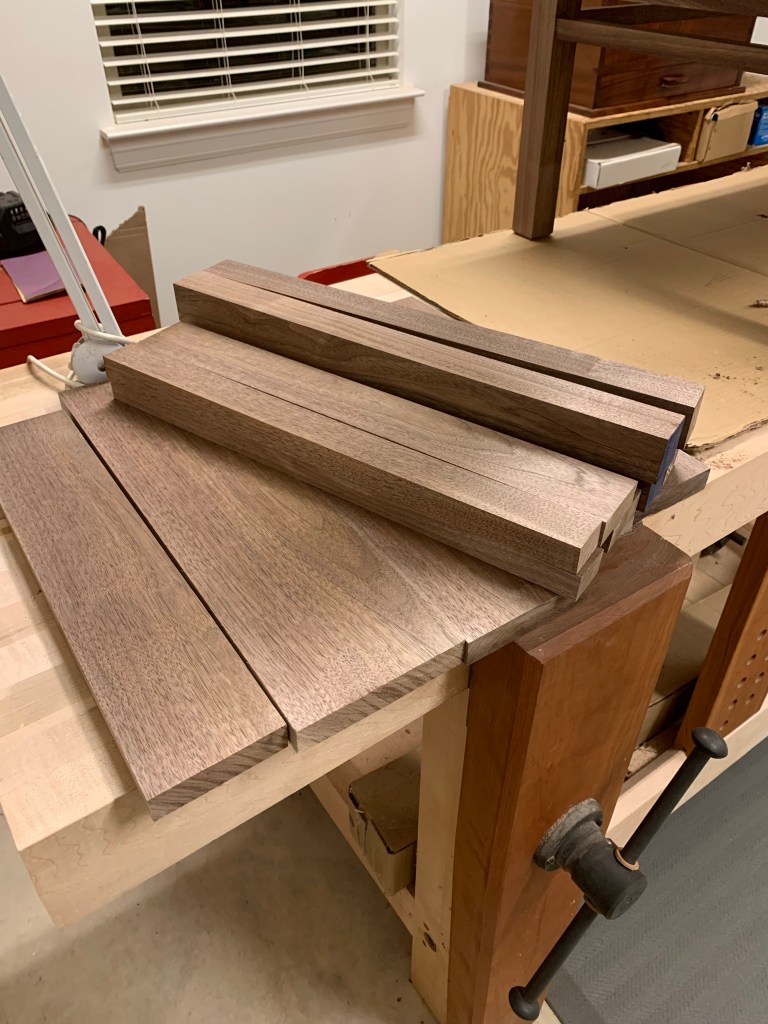
Several months ago while picking up lumber for the Walnut Coffee table, I also purchased lumber for a cherry table. I’m glad I made the purchase at that time since prices have increased dramatically. My vision for the table changed at the last minute when I thought about how much I enjoined the joinery on the Paul Sellers table I made a few years ago. I used a similar shelf on the bar cart as well. I’m just a gluten for mortise and tenon joints.

When I purchased the lumber I had smaller legs in mind so was content with 8/4. Now I’m going to need to stretch it so that I can get 2 1/4 finished legs out of it. Several of you have noticed an increased use of power tools in the last year. I have always used power tools where it makes sense and hand tools where they are most effective or I get more joy. Most projects start with the break down of stock and I always reach for my hand saws. Today I grabbed the Bad Axe D8. It’s pure pleasure to use this saw. As I write this post I went back and realized that I have had this saw for five years and It seems that long enough to truly recommend it.
Since I am using rough lumber, I flattened one edge with my hand planes, in this case a Stanley #7. Then used the planer for the remainder of the dimensioning, I talked about the use of sleds in the planer rather than the jointer in a previous post.
In order to make the legs the correct dimensions I needed to glue a 1/2” strip before cutting the board into individual legs.
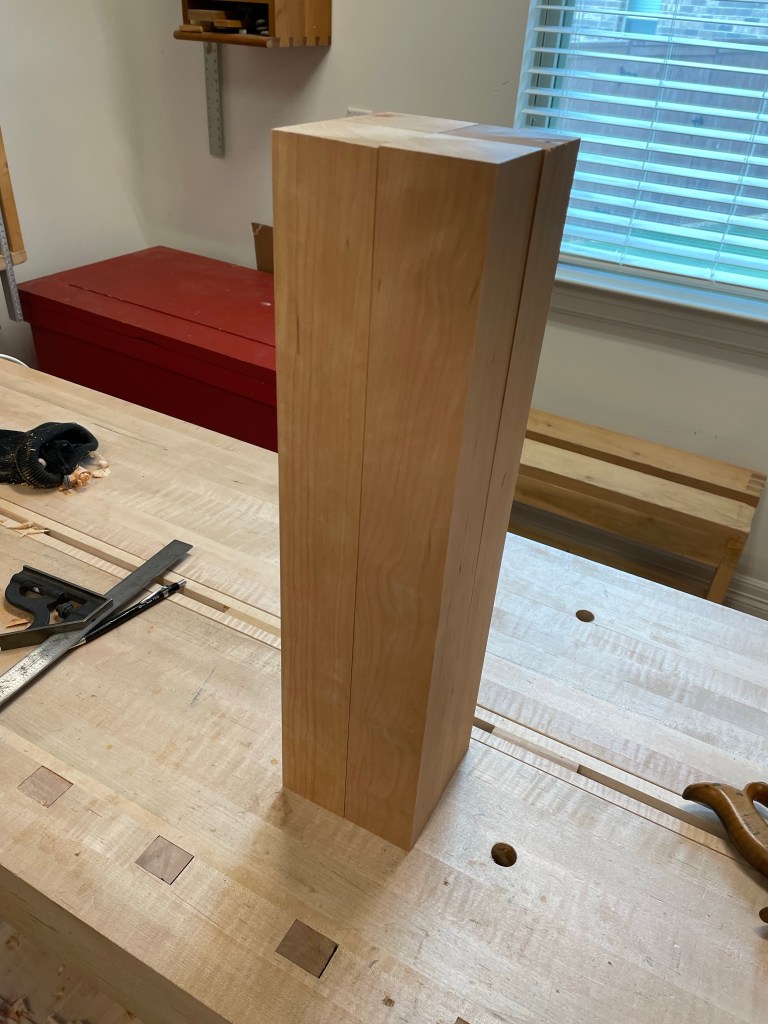
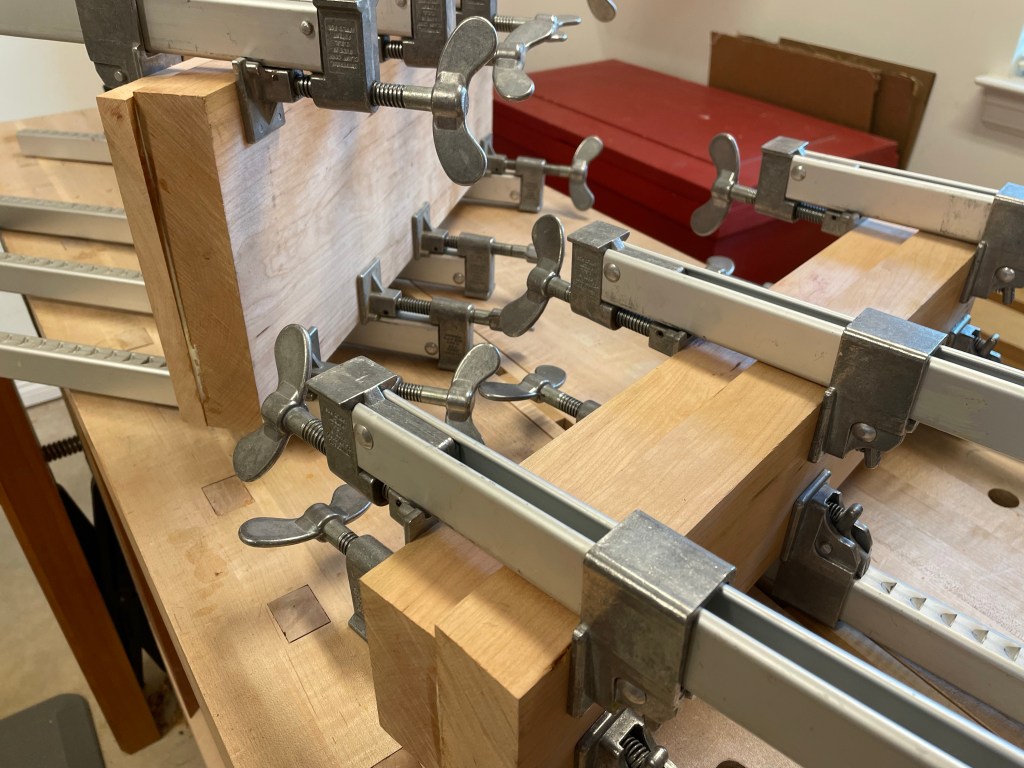

Now the hard part, which side faces out…….
The Planes in my hand
Watching YouTube and reading many blogs, it appears everyone has an opinion on the tools a woodworker should own. I much prefer to see a picture of someone’s bench to see the planes that have actually been used.
In my tool chest and cabinet are all the standard size bench planes with the exception of a number 1. Numbers 2,3,4,5,6,7,8 stand ready for use like chess pieces on a board. Obviously the project you work on often dictates the tool you should use, however there are three bench planes that will most likely find their way into my hand.
Sargent #409 – This plane is used on most projects and although officially a smoother has been used as a shooting plane, jointer, straight edge, and clamping caul. Occasionally if I’m doing a lot of work I’ll also have a Stanley #4 on the bench just to keep moving between sharpening. If you are asking why the Sargent before the Stanley , Ill direct you to another blog, but in reality it just fits differently and I like the look.

Stanley #7
A Stanley #5 is the go to plane for many people and I can’t disagree with the utility of the plane. It can handle most of the jobs of the #4 and many of the jobs of the #7, however I rarely find it on my bench. If I’m reaching for a larger plane it’s generally because I’m working a great length of wood of several feet and the bed length is critical to providing the surface I am looking for. It also has more mass. The #7 does not have the mass of a #8 which makes it easier to use and although I’ve used my #8 a few times I have not come across anything that a #7 can’t handle.

Finally my favorite bench plane is the Stanley#3 or Sargent 407. I may not use it as much as the Sargent 409 but I get a tingle when I reach for it in the cabinet. There is emotional magnetism with this plane that makes me want to use it. The lighter weight and slightly shorter bed makes it ideal for may of the small projects that I tackle.
Many people follow my blog and occasionally I get the question which plane should someone buy. It’s not something that can be easily answered, but I would initially get a #4 and if you are working with longer boards find a #7, I don’t think you would go wrong. If money is a driving factor you could get away with a #5. The other question that I’ve had is about the Lie Nielsen and Veritas versions. They’re great! When I started gathering tools the Stanley planes were widely available, very cheap and easy to repair. Today they are more expensive but still a bargain. It seemed like a low cost way to go and I’ve been very happy with my choice.
Walnut Side Table – Finishing the Top
The Walnut side table has been a very enjoyable project. It was small had fun joints and is very useful. The top was screeed to the legs using oversized holes and brass screws, and once complete a final coat of finish was added.
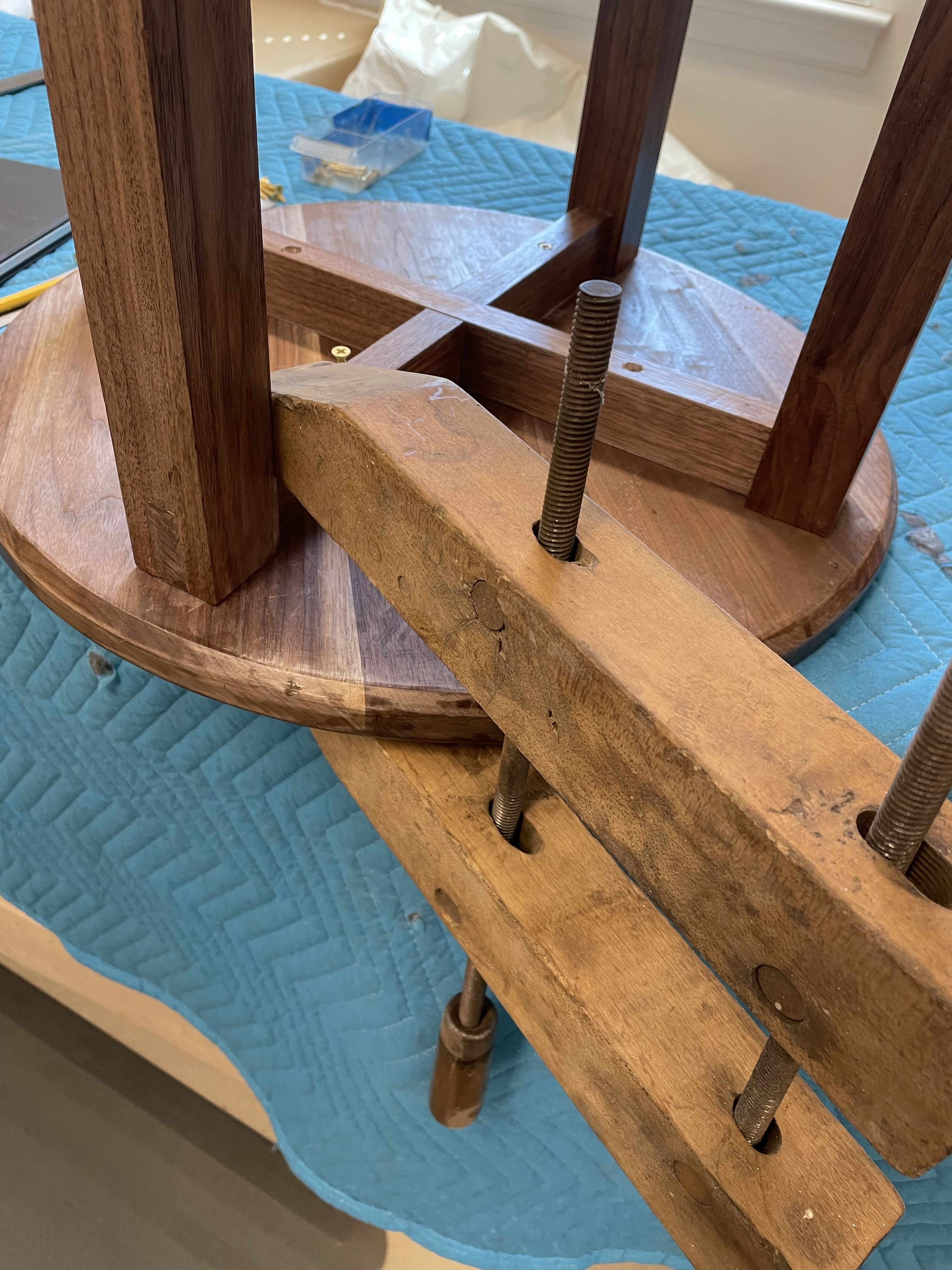
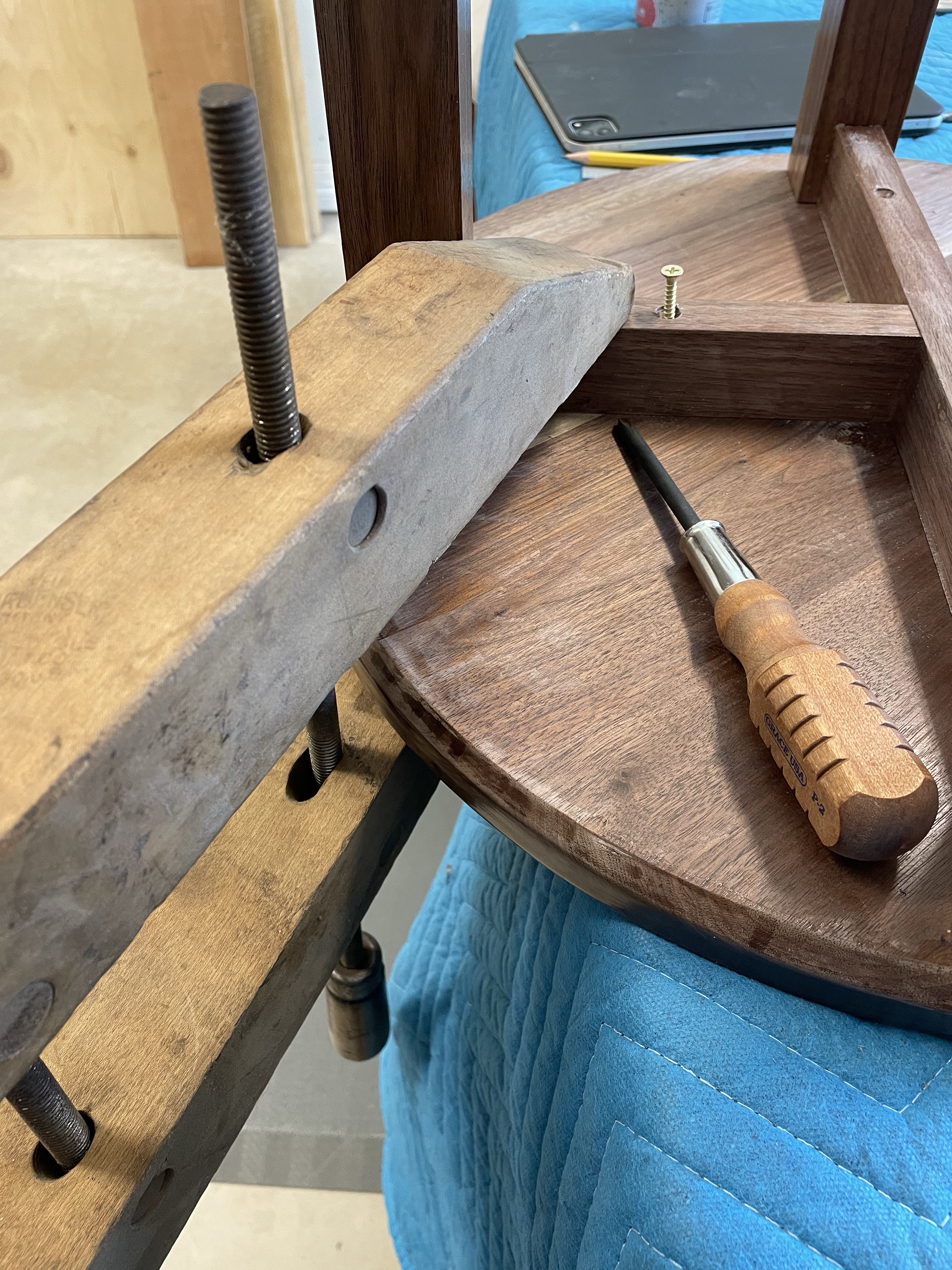

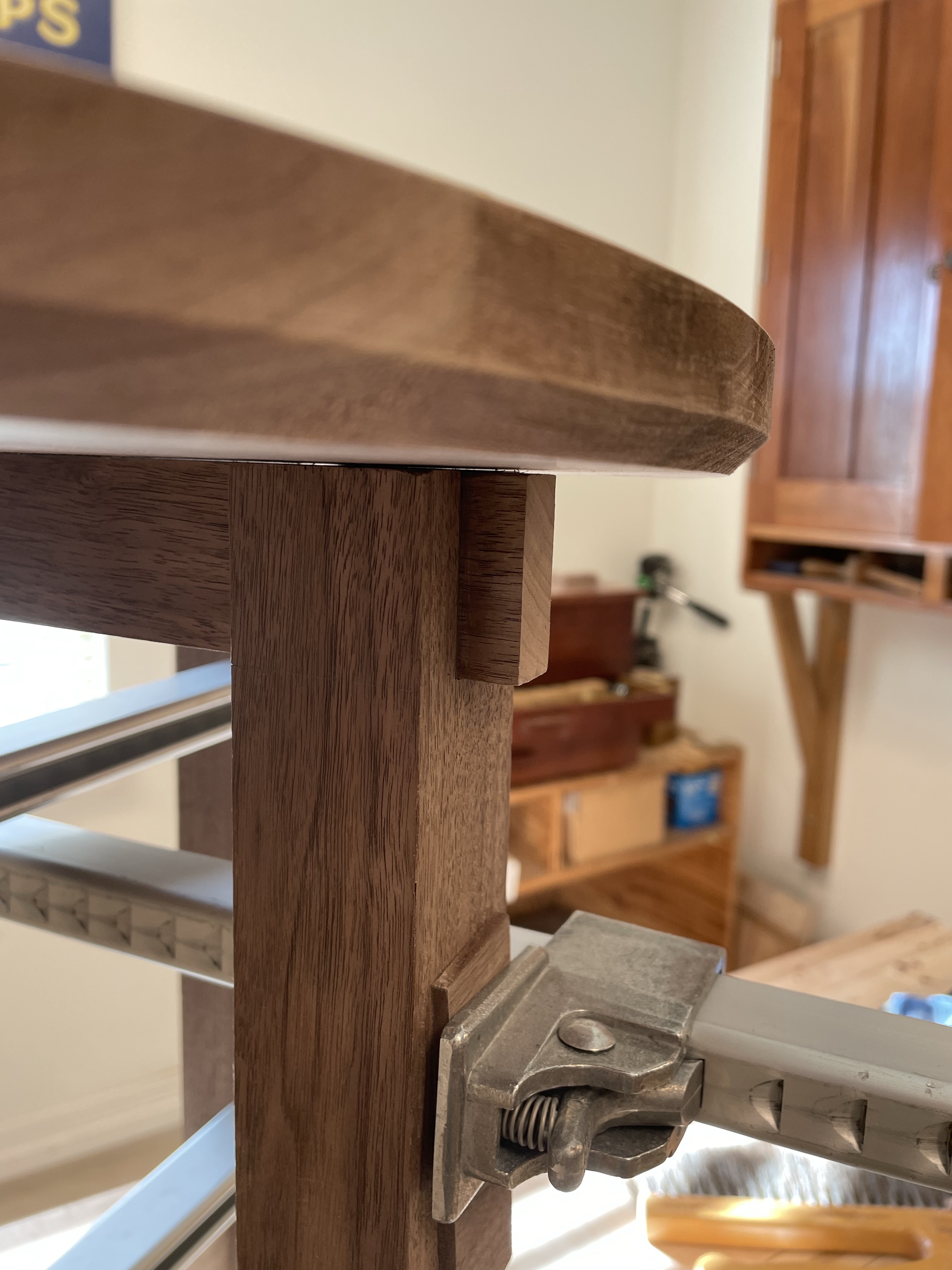
A couple of features that add character were the use of the bridal joints and through tennons along with chamfering the top. I am particularly happy with the chamfer and how it lightened the top by giving it a thinner profile.
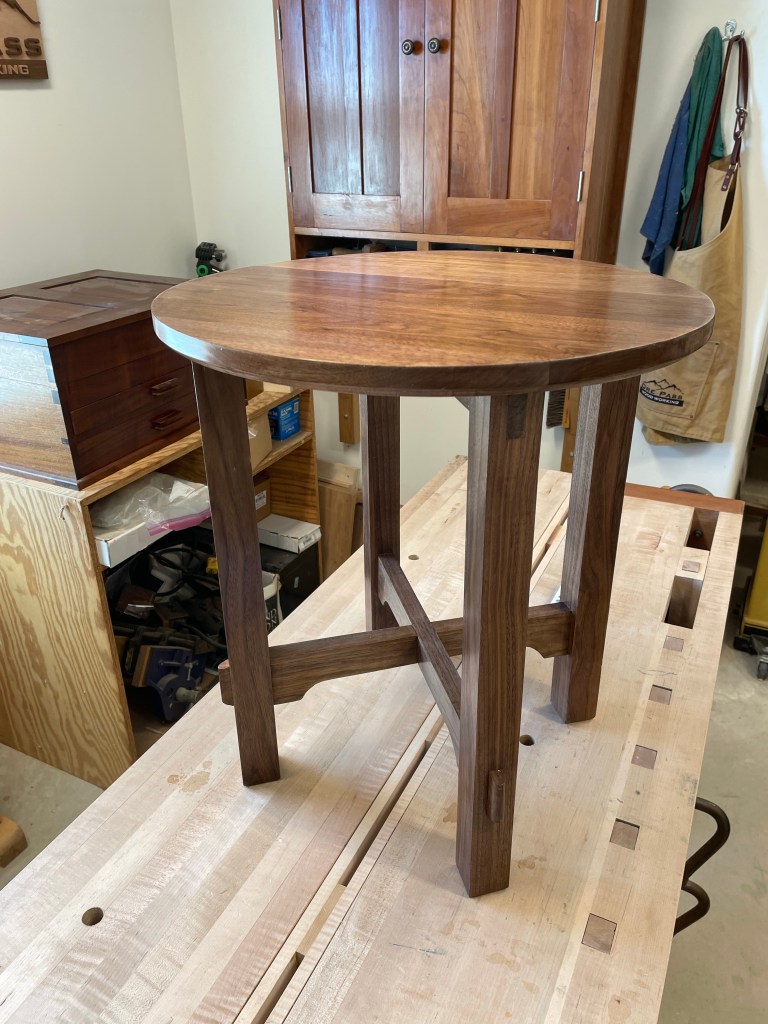
Thanks for following along, time for a new project!

Walnut Side Table – Top Cracks
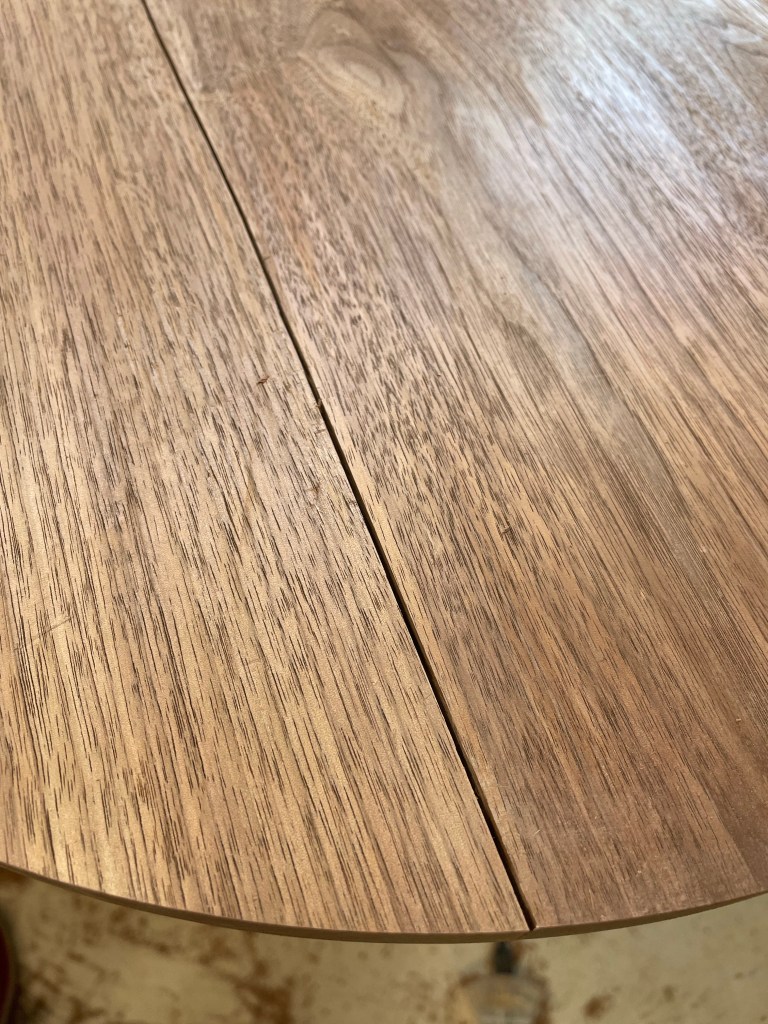
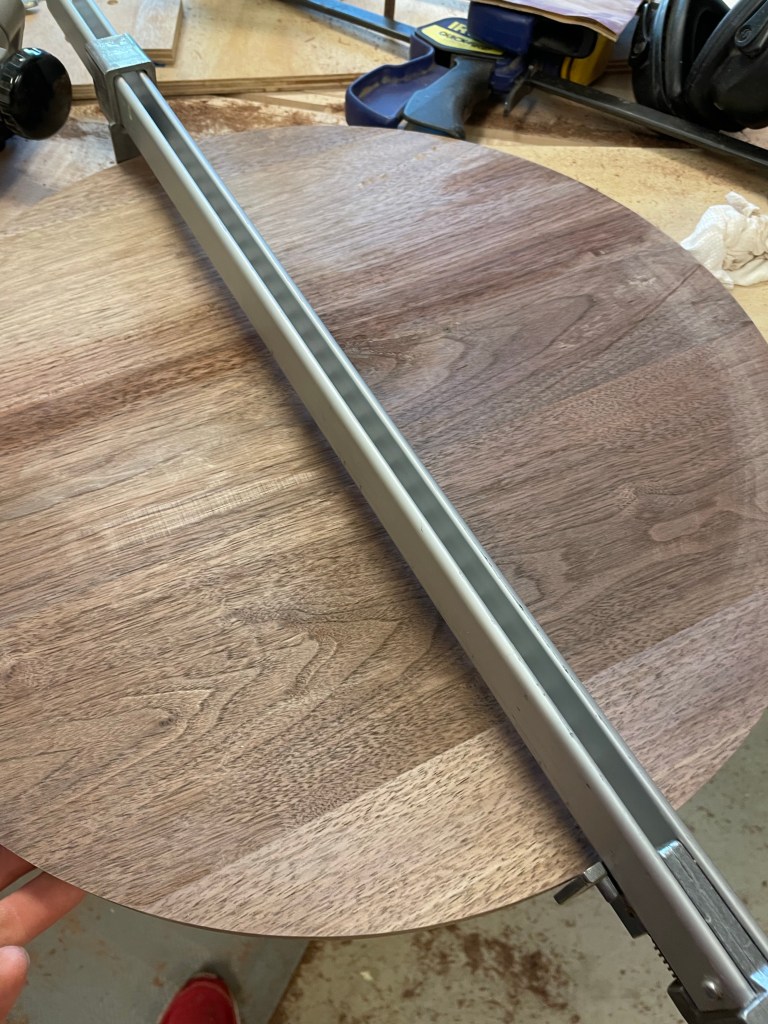
After gluing up the Table Top, rough sawing the circular outline, routing and then chamfering I guess the glue joint on the table decided it had enough.It’s a clean break most of the way down the glue line so I just added a little more glue worked it into the joint and clamped it up. Not a bad problem to solve!
Walnut Side Table – Rounded Tenons
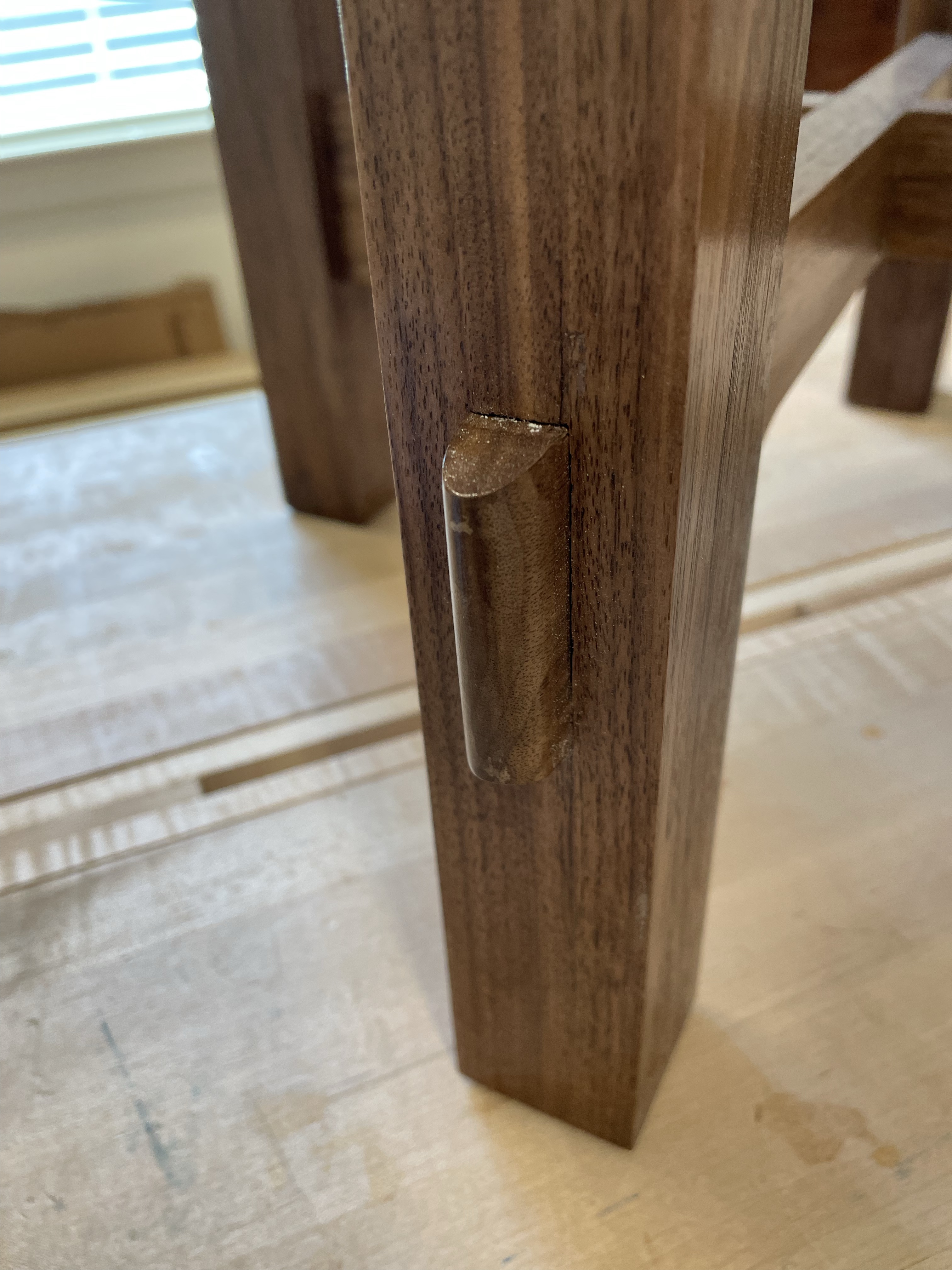
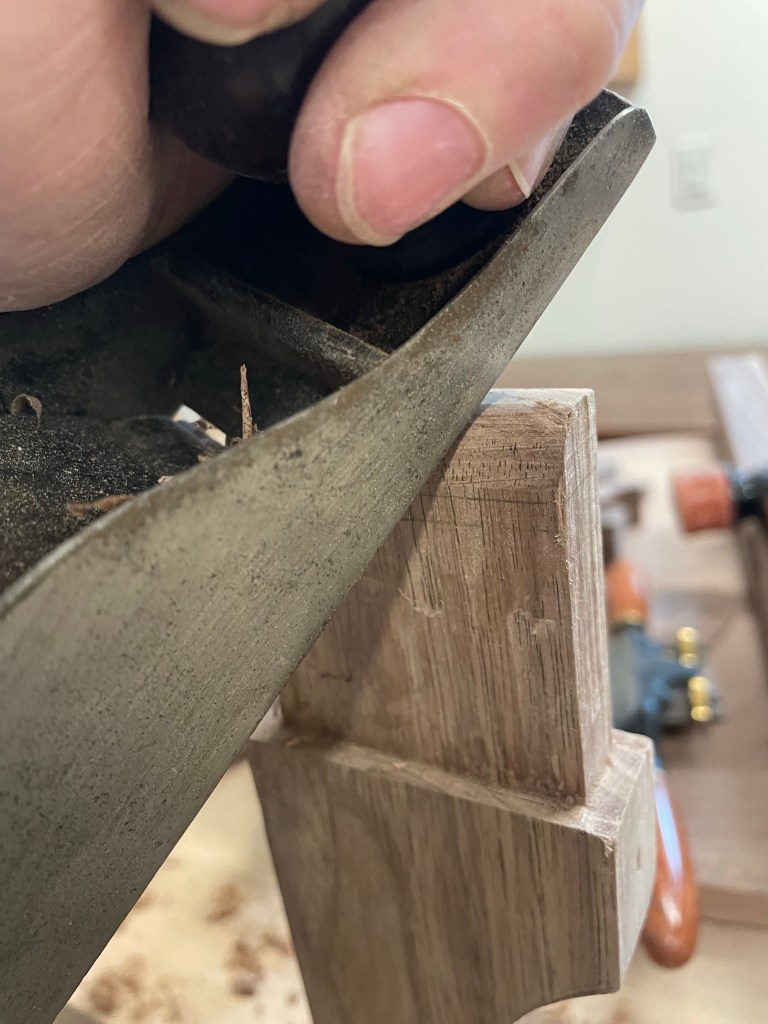
Several years ago I had the opportunity to take the 9 day foundations class from Paul Sellers. It was an incredible experience and one that I doubt will be available in the future. Paul has moved onto Woodworking Masterclasses and Common Woodwork as a platform to reach a larger audience. One of the projects in this class involved through tenons and a lesson in the versatility of the hand plane. If you have never tried rounding over end grain, pull out a board, sharpen up your plane and give it a go.
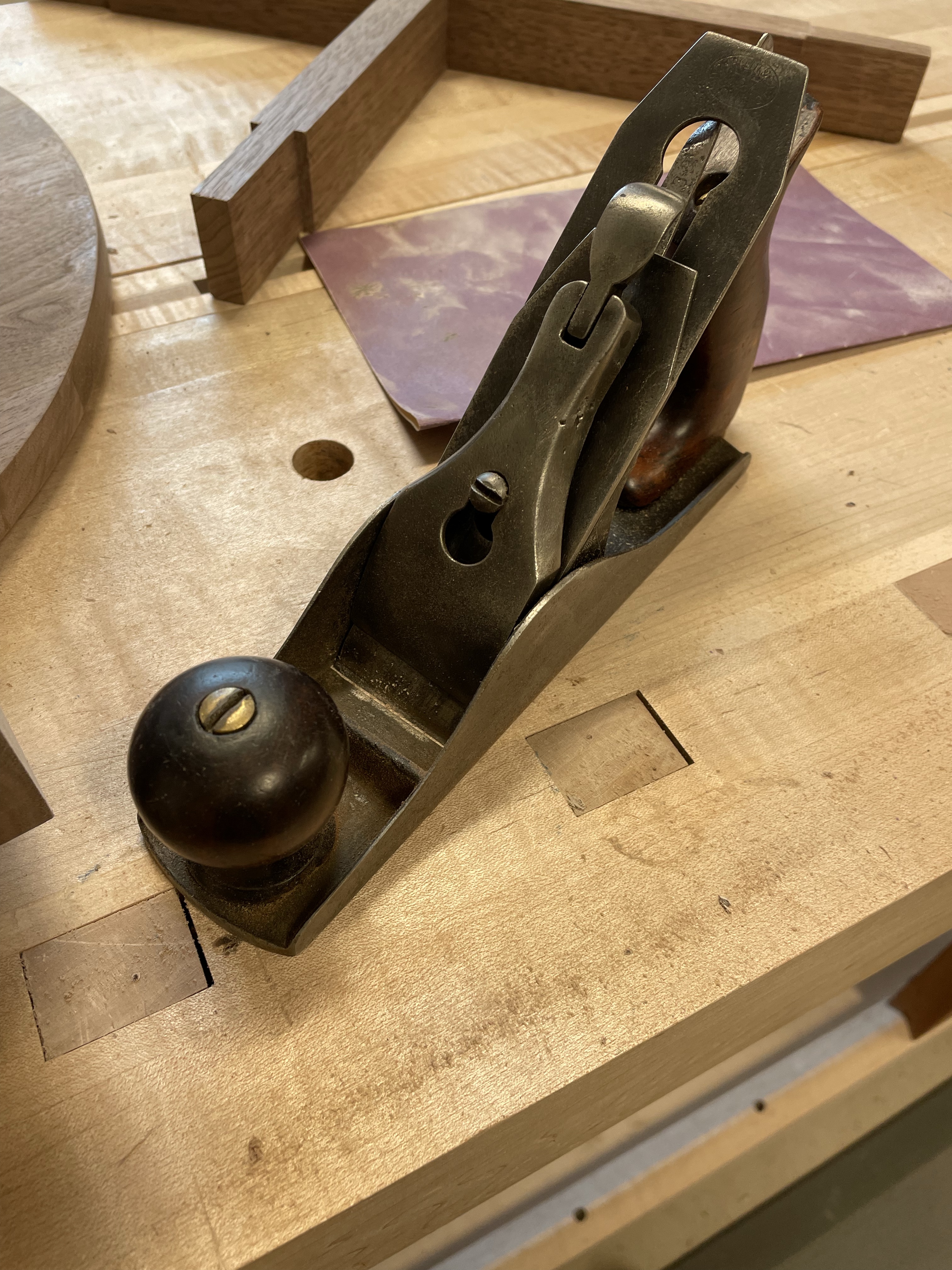
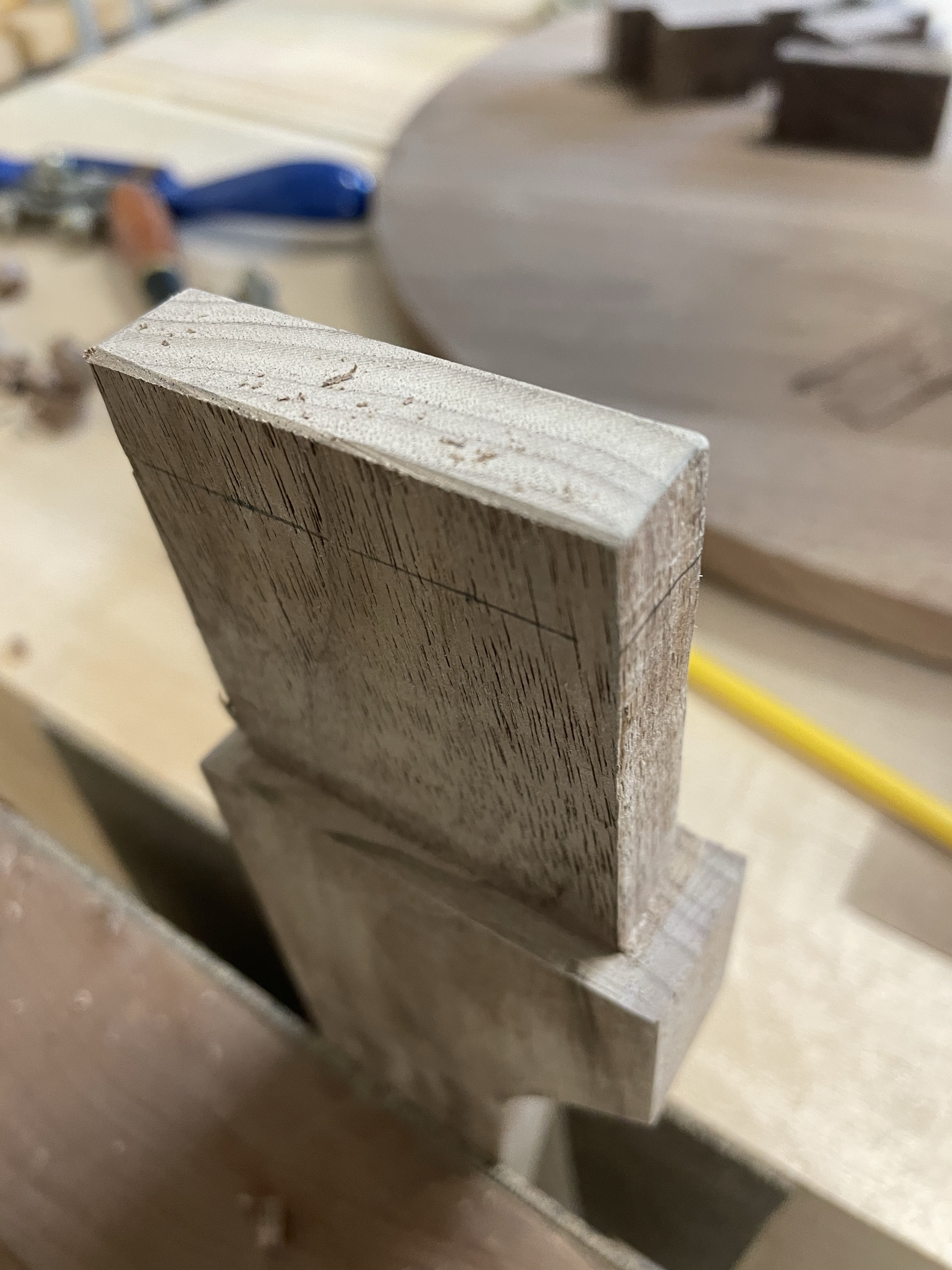
Working end grain requires a sharp blade. A few minutes on the diamond plates and the plane was ready to go. Working across the tenon I take small slices of wood working up and down the tenon until its rounded over. Watch for tear out on the ends although they will later be chamfered with a chisel. When the tenon looks balance a file or sandpaper can be used to smooth out the finished product.

The final act of the rounded tenon is chamfering the ends. This removes any tear out and gives a nice finished look. Using a chisel it only took a couple of hits with a mallet and they are complete. And if you chip out by the tenon a little superglue may just handle the problem.


Walnut Side Table – Lumber
There are always a few additional boards left over when completing a project, these boards could sit on a rack for years collecting dust. Perhaps a small table could put them to use?

Several years ago I gathered up various pieces of White Oak from a coffee table build and built a round table that has been exactly what was needed in our living room. With a few modifications I’ll do the same with the Walnut. Legs first then moving on to the other parts of the table.
Filling Knots with Epoxy
Trying a new process is always a great challenge and continues to grow the types of projects I can tackle. The Walnut that I used for the Walnut Coffee Table and Walnut Side table had typical knots, it seems like a great opportunity to try an epoxy fill

Wandering around the local home store I searched for epoxy and the only thing I could find was Gorilla Brand. It may be fine but I also knew that I needed to tint it black.
Perhaps a more professional approach and some research would be helpful. I’ve read many articles and seen you tube videos of the river tables and other uses so I went to my usual source of information and found an article and video clip, #194–Nov/Dec 2007 Issue of Fine Woodworking. I then decided that since I could not find any local epoxy, to go to Lee Valley and order the Epoxy and Tint.
The epoxy came as a kit and the tint was also available at Lee Valley, no, I’m not cleaning it up so you can see the brand just go to the web site and look up tint.
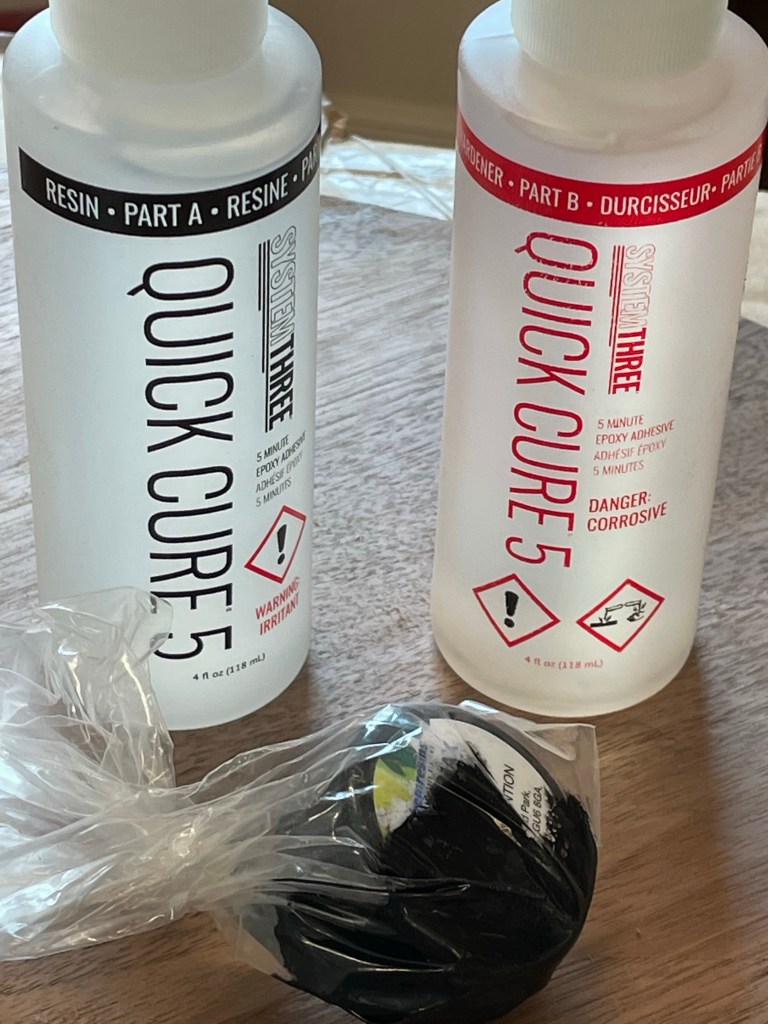
I grabbed all the prep material I needed, cardboard to protect my bench, mixing sticks, paper towel and a board to mix on. Next I cleaned up the knots and removed Andy loose material with mineral spirits.
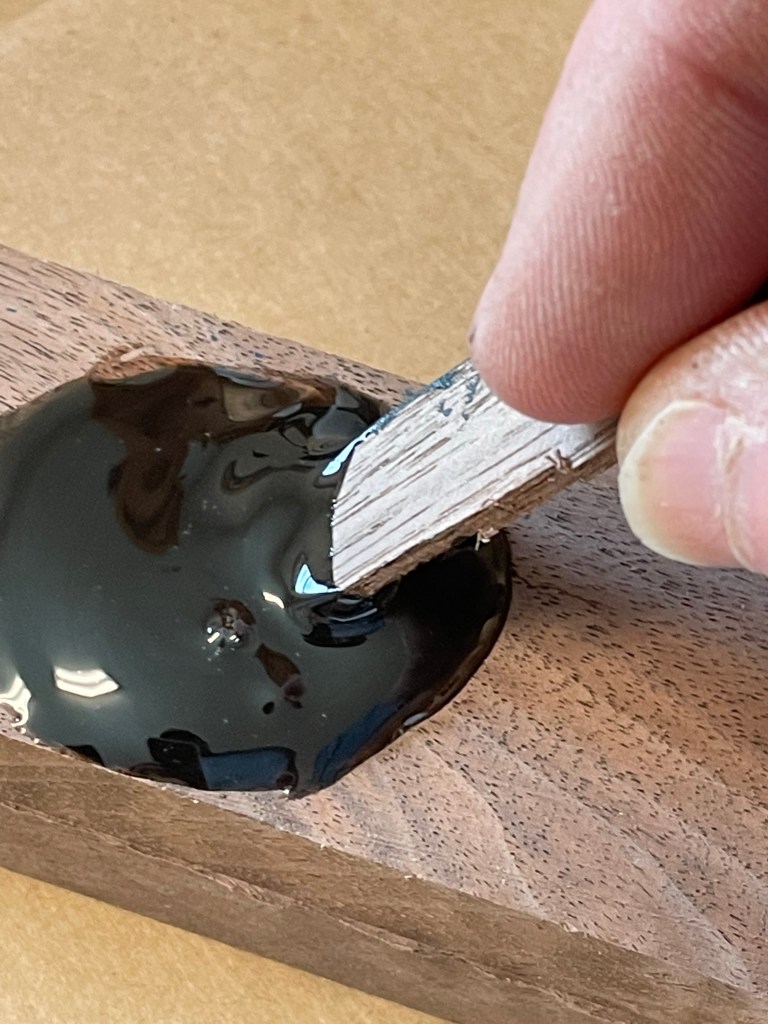

The epoxy mixed easily and it only took a small amount of tint, then I left it over night to harden.

I used both a plane and scrapers to flatten the hardened epoxy. With a little work the knots were filled and I was able to move on with finishing. As the first time using epoxy I have no experience to compare with other products and would love hearing others experience.
Walnut coffee Table – Top
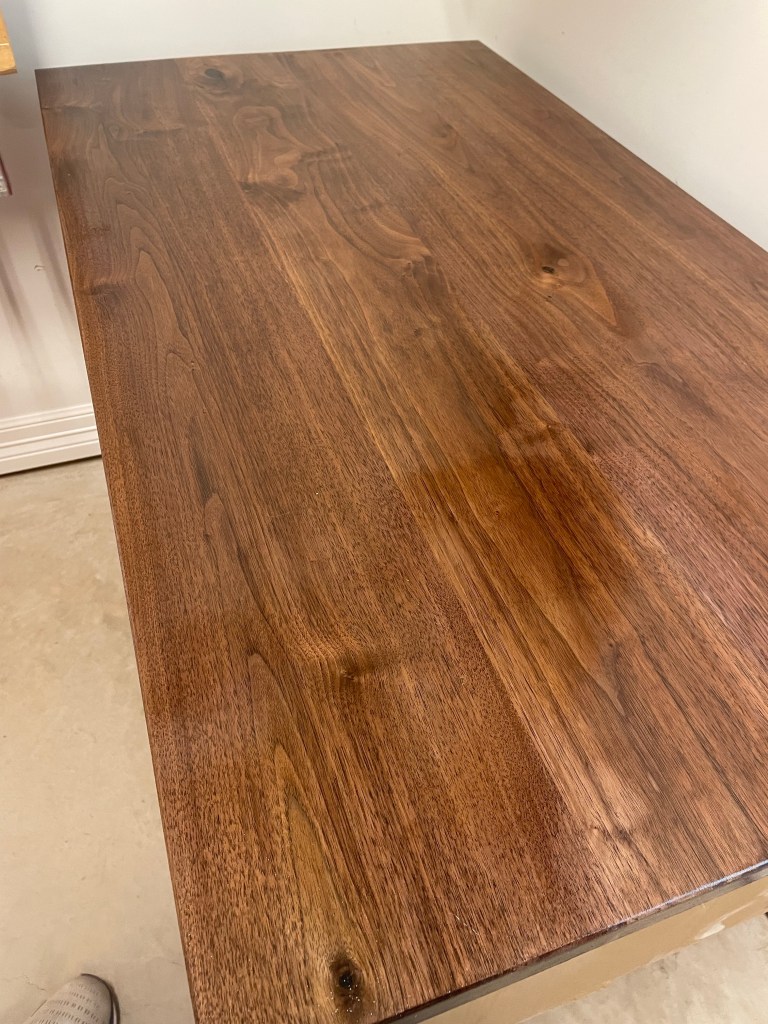
I have heard many people discuss whether to make the top first or last. I don’t see any reason to do one over the other. For this project the top was done last. Milling was typical slog of passing boards through the jointer followed by hand planing the edges and running the opposite edge through the table saw.
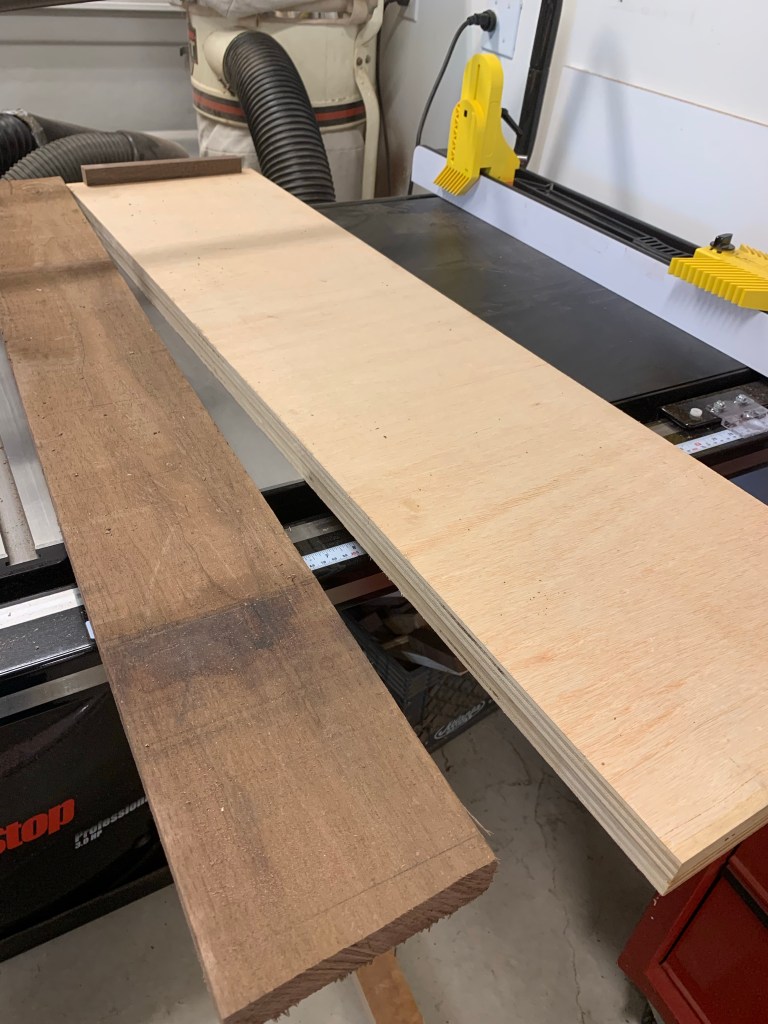
I used two planes to work the edges. Stanley #4 to rough the edges followed by a #7. I needed the longer plane due to the 48” length of the boards.
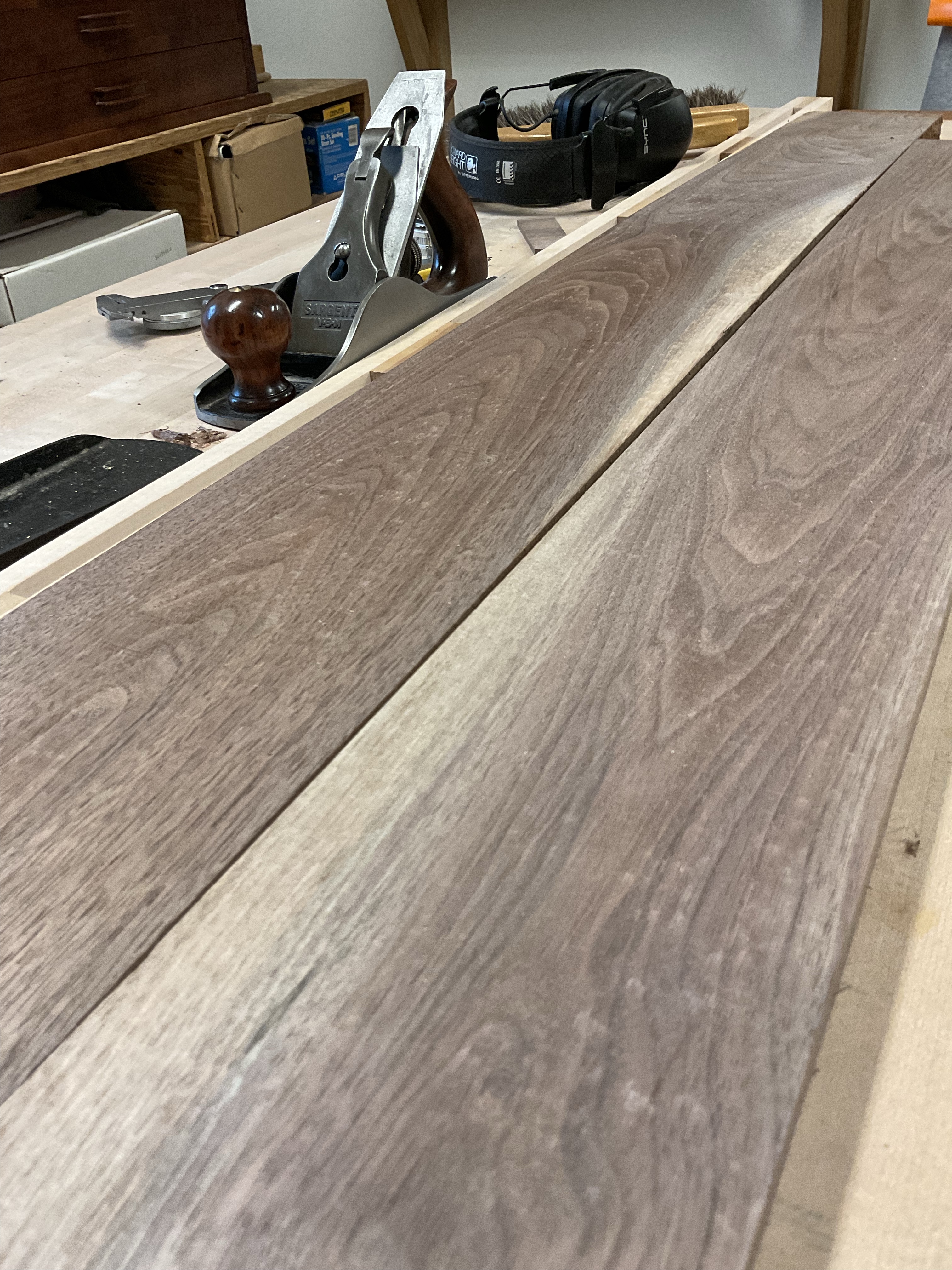
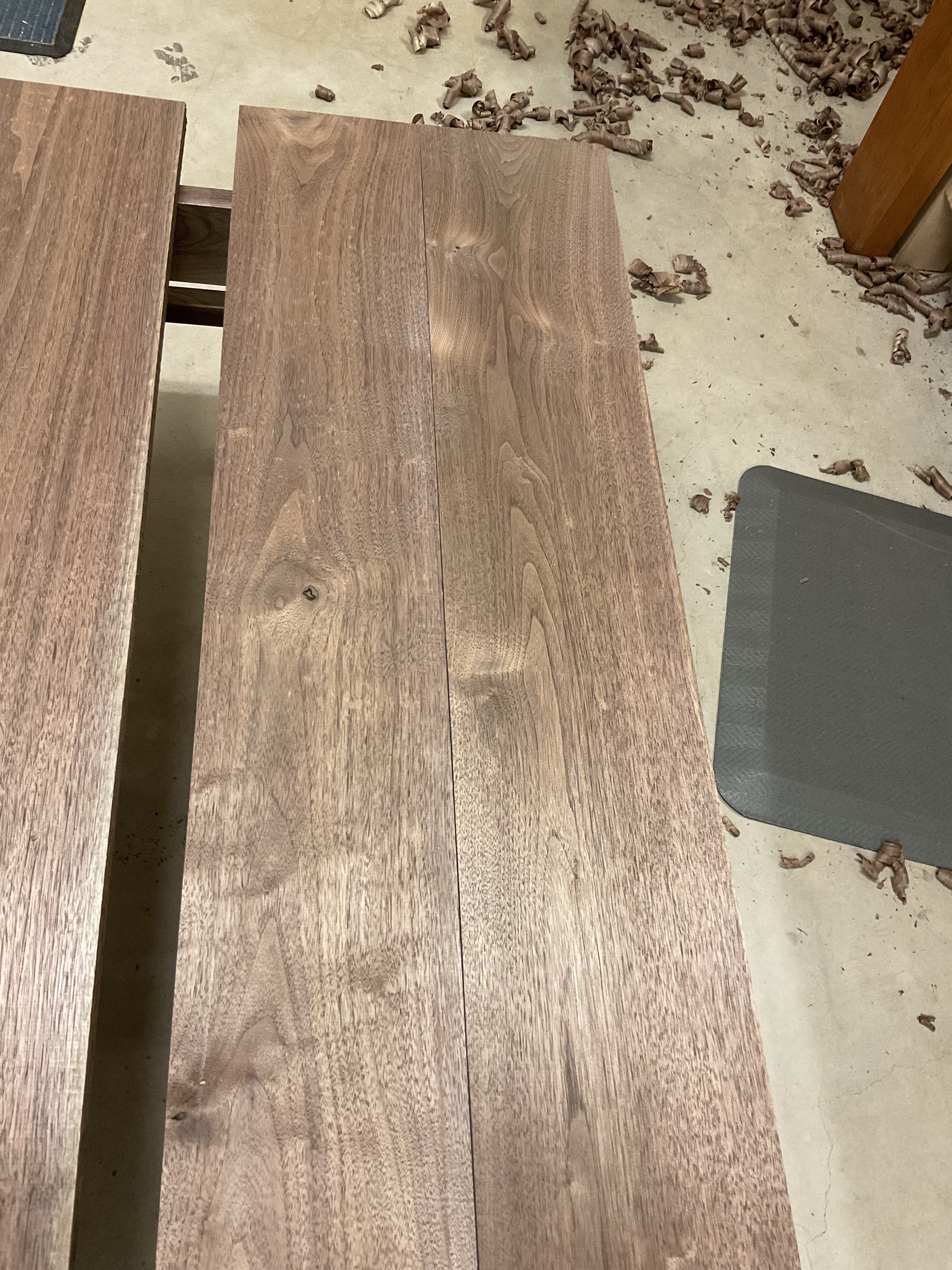

With the edges jointed and parallel I glued up the top and let it sit overnight. The next day was spent planing and smoothing. I did notice a couple of knots which will need to be filled.
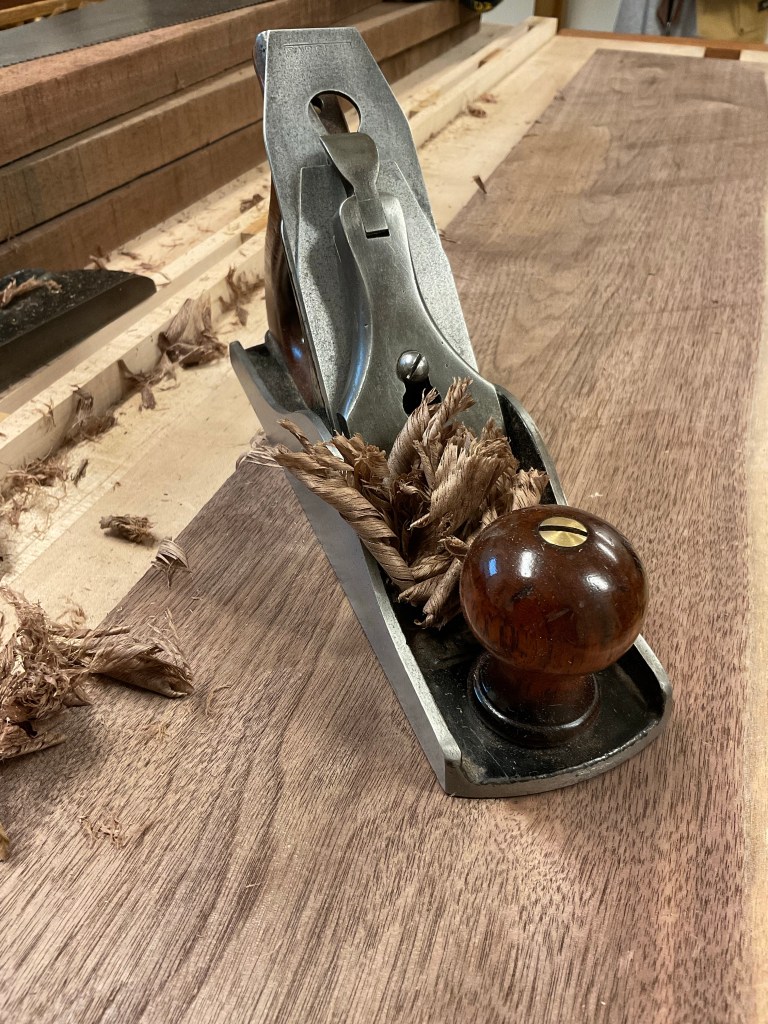

Trimming the edges was done on the Tablesaw and hand planed with a very sharp plane. I also noticed a couple of Knots that needed to be filled, so as you read I am also reading about how to use Epoxy.
Walnut Coffee Table – Side Rails
Making the upper and lower rails was an exercise in planing boards and cutting tenons. I did most of the work by hand and forgot to take pictures.

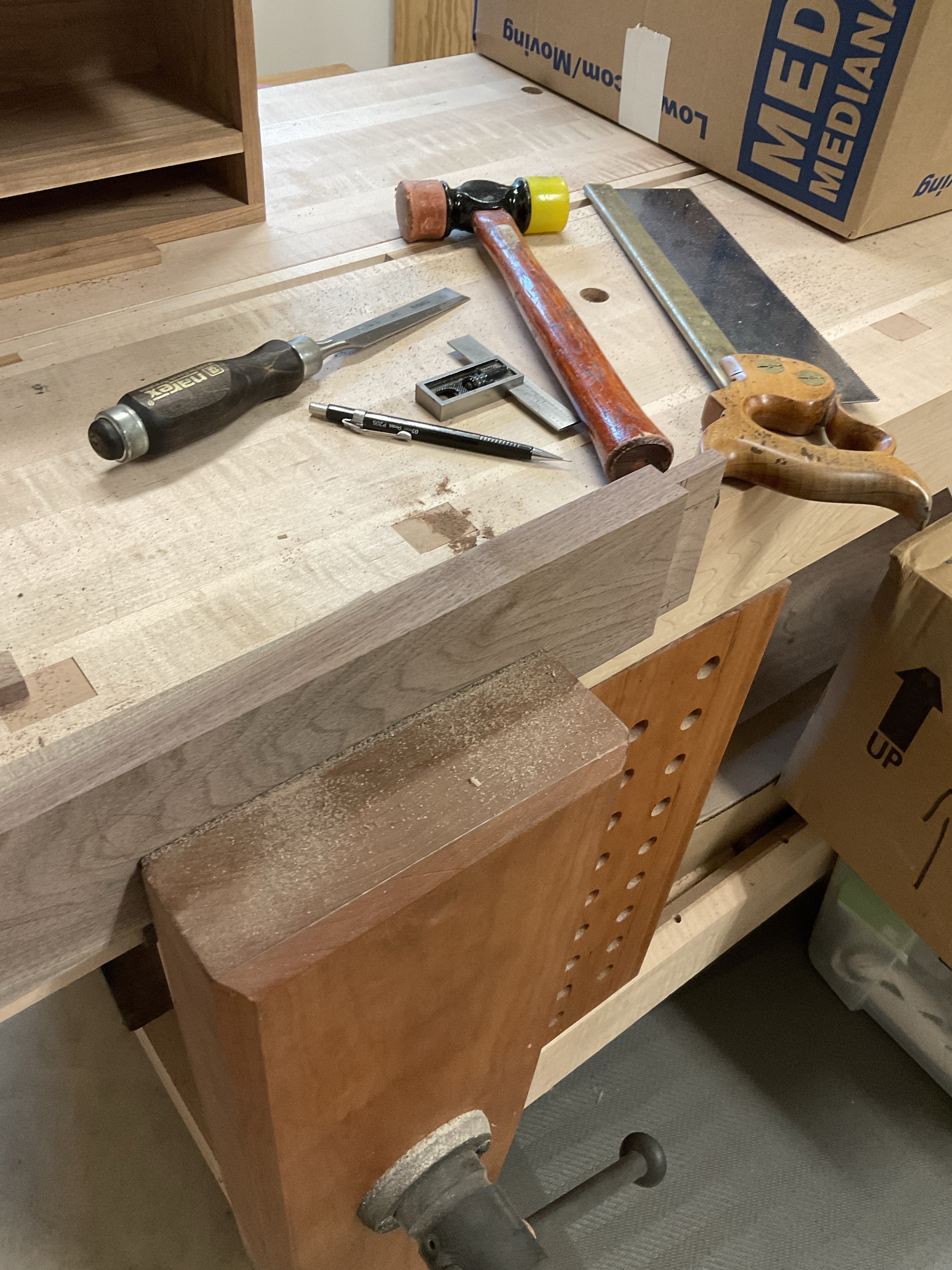
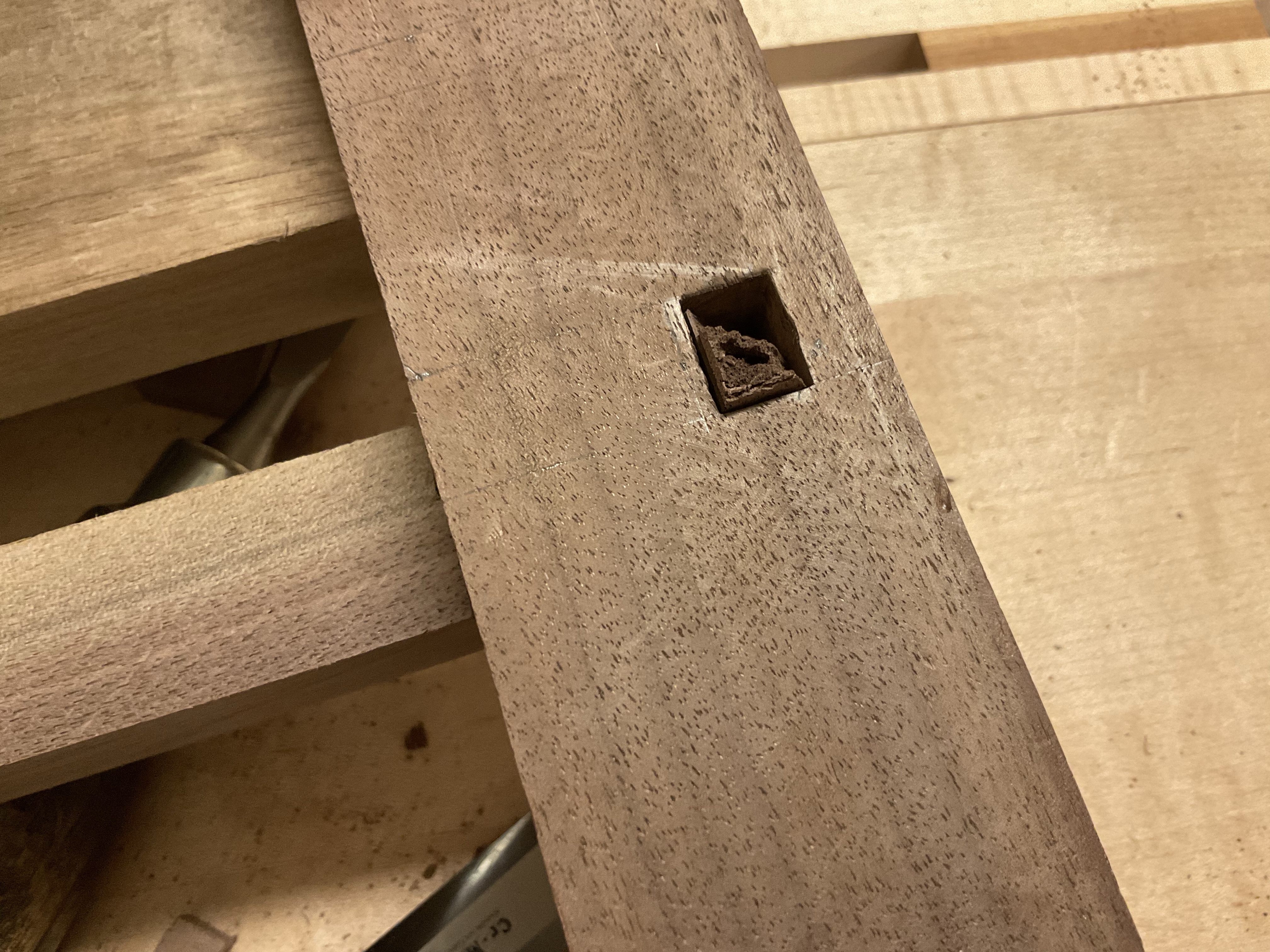
Oops. The lower rail is just over an inch square, when I was test fitting the pieces I realized that I left one of the tenons longer than the others and when pulling it loose it snapped. I used the mortiser to drill out the broken piece and made another to fit. Lesson learned. Lower rails should have thicker tenons.


Finally I was able to assemble the table legs and sides.

The glue up was relatively uneventful.
Walnut Coffee Table – Lumber
Procrastination is an art that I suppose could continue for ever. Today however was the time to begin preparing the material for a walnut coffee table. Walnut is a new species in my shop and I’m looking forward to learning about its desire to be turned into furniture.

All projects begin with a plan followed by choosing and preparing lumber. The dimensions for this table are roughly based on a previous table I made designed by Paul Sellers. It’s a simpler table but should satisfy its future owner. I used the same method for preparing the wood as I outlined in the Jointing without a jointer blog and it worked great. This is where I made the longer sled to fit the lumber needed for the side rails and top. Not long after the picture was taken I realized that I forgot to hook up the dust collector. The magical on off switch doesn’t work if the hose is disconnected.

Walnut milled nicely on the planer and I even milled several pieces by hand.


 orepass